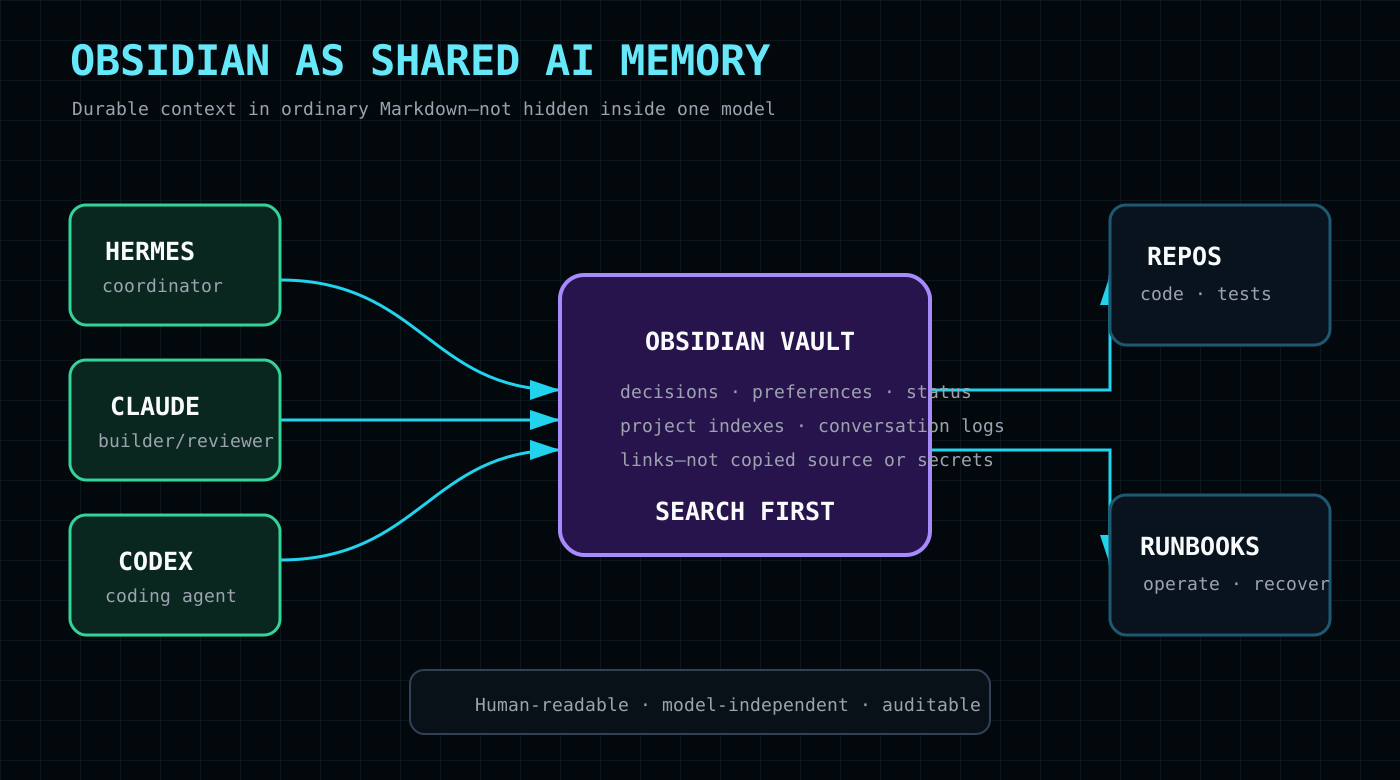
AI assistants can remember a surprising amount during a conversation. The problem is what happens next week, after a new session, a model change or a switch from one assistant to another.
I use Hermes Agent, Claude Code and Codex for different kinds of work. I wanted them to share the important context without depending on one provider’s private chat history. My solution was not a complicated vector database or a custom memory server. It was an Obsidian vault built from ordinary Markdown files.
The important part is not installing Obsidian. It is deciding what the vault is for and teaching every assistant to use it consistently.
The role of the vault
My Obsidian vault is the durable, human-readable record for:
- significant decisions and why I made them;
- stable preferences and working conventions;
- project direction and current status;
- systems, devices and services I may need to troubleshoot later;
- concise outcomes from substantial conversations;
- links to the authoritative code, documentation and runbooks.
It is deliberately model-agnostic. If I stop using one AI provider tomorrow, the knowledge remains readable in folders I control.
What the vault is not
Obsidian is not my source-code repository. It is not a replacement for project documentation, and it is definitely not a secrets manager.
I do not use it for:
- passwords, tokens, API keys or recovery codes;
- raw chat transcripts;
- command-by-command troubleshooting logs;
- large copies of documents that already have an authoritative home;
- temporary task progress that will be stale next week;
- detailed deployment procedures better kept with the project or in an operations wiki.
A useful note says, “We chose this approach because…” and links to the relevant project. It does not paste five pages of code or expose a credential.
My search-first rule
The biggest risk with AI-written notes is duplication. Every assistant is happy to create a fresh summary, and soon the vault contains five slightly different accounts of the same project.
My operating rule is:
- Search the vault for the topic.
- Update the most authoritative existing note.
- Update the relevant index if the project’s direction or status changed.
- Add one dated conversation note for a substantial discussion.
- Create a new topical note only when no suitable home exists.
This makes curation more important than note generation.
The three layers I keep separate
1. Project repositories
The repository remains authoritative for code, tests, build instructions, release assets and technical detail.
2. Operations documentation
My private operations wiki holds practical runbooks: where things live, how services start, how to verify them and how a family member could recover them.
3. Obsidian
Obsidian holds durable narrative context: what changed, what was decided, why it matters and where the authoritative material lives.
Keeping these layers separate stops the vault becoming an unmaintainable copy of everything on the computer.
How I make different AIs follow the same process
At the root of my workspace I keep shared instruction files such as:
AGENTS.mdfor rules that should apply across tools;CLAUDE.mdfor Claude-specific entry points;CODEX.mdfor Codex-specific behavior.
The shared rules tell each agent to:
- read the workspace and project instructions before acting;
- treat Obsidian as the durable record for meaningful work;
- search before creating notes;
- update indexes and authoritative notes rather than producing duplicates;
- add one concise dated conversation log when warranted;
- link to project files instead of copying them;
- never store secrets.
Hermes also has its own persistent memory, but I treat that as a compact convenience layer. Stable user preferences can live there. The richer project and system history belongs in inspectable files.
A practical capture example
Suppose an AI repairs an automated website publisher after an FTPS server repeatedly disconnects.
The source repository should contain:
- the retry implementation;
- tests;
- detailed logs and commands;
- the deployment documentation.
The Obsidian project note might record:
- the publisher now retries interrupted files;
- failures must name the affected file and retry count;
- the hosting server can close FTPS connections intermittently;
- a link to the repository runbook.
The dated conversation note might briefly record why the change was made and the verified outcome. It should not copy every error line.
Why this works better than AI memory alone
It survives model changes
Claude, Codex, Hermes and future tools can all read Markdown.
I can inspect and correct it
There is no mystery about what the AI “remembers.” I can open the note, edit a mistake and see the links.
It supports handover
A new agent—or another human—can start from the project index rather than reconstructing months of chat history.
It makes disagreement visible
If a repository says one thing and an old note says another, the conflict can be found and corrected. Hidden conversational memory is much harder to audit.
The failure modes
AI note spam
If every session creates a new summary, the vault becomes less useful, not more. Search first and update in place.
Confusing sync with backup
A synced deletion can propagate perfectly to every device. I keep versioned snapshots and at least one recovery copy outside normal agent deletion authority.
Multiple agents editing the same index
Concurrent edits can overwrite or duplicate entries. Agents should re-read a note immediately before and after patching it, make narrow changes and avoid broad reorganisations while other writers are active.
Storing too much operational detail
An Obsidian vault full of deployment commands and volatile service state becomes stale quickly. Link to the runbook instead.
Accidentally storing secrets
A shared human-and-agent knowledge base is the wrong place for credentials. Store only the fact that a recovery path exists and where the approved secret manager is—not the secret itself.
A simple folder pattern
There is no single correct vault layout, but mine uses:
- a home page;
- numbered project and system areas;
- an index inside each major area;
- project or topic notes beneath those indexes;
- a chronological conversation-log folder;
- decisions and preferences as a separate durable layer.
The precise numbers and folder names matter less than having obvious authoritative homes.
My completion rule for AI-assisted work
At the end of meaningful work, the agent should ask internally:
- Did we create a durable decision, preference or warning?
- Did a project’s direction or status materially change?
- Would this context save time in a future session?
- Does an existing note already cover it?
- Is the repository or operations wiki a better home?
If the answer warrants capture, update the vault. If not, leave it alone.
Why I still use this system
Obsidian did not make my AIs magically share one brain. It gave them something more practical: a common, inspectable notebook with rules about what belongs there.
The value comes from restraint. Search first. Preserve authoritative sources. Summarise decisions, not transcripts. Keep secrets elsewhere. Done properly, a Markdown vault becomes a reliable memory layer that is independent of whichever AI happens to be running today.